Tag Archives: chess positions

The World’s Most Nearly Impossible Chess Puzzles

22
Filed under General Chess
Tagged as chess, chess brain teasers, chess brainteasers, chess games, chess positions, chess problems, Chess Puzzles, chess riddles, chess test positions, logic chess questions, logical chess, logical chess problems

1st Puzzle

puzzle1
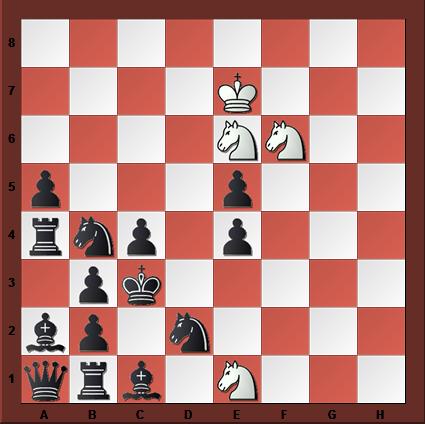
This puzzle was devised by Dr. Karl Fabel and published in 1949 in “T.R.D.’s Diamond Jubilee” issue of the Fairy Chess Review.

WHITE TO PLAY AND MATE IN SIXTY.

Fen Position

For those of you who are interested in analyzing the position with their favorite chess program here is the FEN Position, you can simply copy it and paste it in Chessbase or you could simple save it in a .Fen file and load it as FEN.

8/4K3/4NN2/p3p3/rnp1p3/1pk5/bp1n4/qrb1N3 w – - 0 1

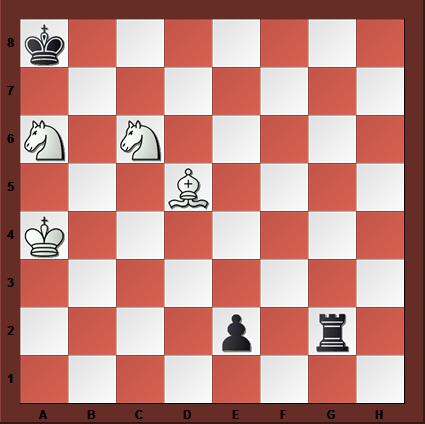
2nd Puzzle

puzzle2
This chess puzzle by C. S. Kipping was published in the Manchester City News in 1911.

WHITE TO PLAY AND MATE IN THREE.

Fen Position

Compared to the last one this is pretty easy but rather baffling how White goes on with the next few moves, by the way this puzzle is for fun.

k7/8/N1N5/3B4/K7/8/4p1r1/8 w – - 0 1

3rd Puzzle

puzzle3
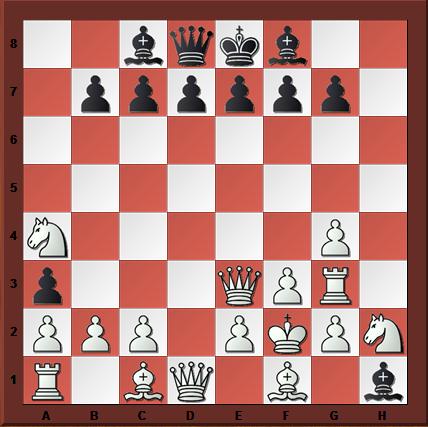
This puzzle was composed by Hans August and Dr. Karl Fabel, and was published in 1949 in Romana de Sah.

WHITE HAS JUST MADE HIS SEVENTEENTH MOVE. WHAT WAS BLACK’S NINTH MOVE, AND WHAT WERE THE MOVES THAT FOLLOWED IT?

Fen Position

Although you will not need the FEN for this one, I will post it just in case you want to try out something ODD.

2bqkb2/1pppppp1/8/8/N5P1/p3QPR1/PPP1PKPN/R1BQ1B1b b – - 0 1

4th Puzzle

puzzle4

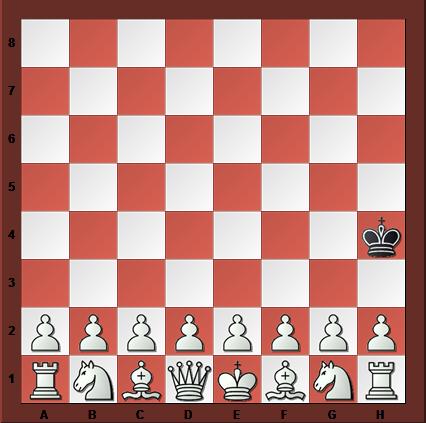
This puzzle is based on a theme by W. A. Shinkman, and the mate-in-three was first solved by Sam Loyd. The puzzle above was published in the Leeds Mercury Supplement in 1895.

WHITE TO PLAY AND MATE IN THREE.

Fen Position

Another easy one but I know there are some who would like to get their engines started and see if the engine can solve but the best way to solve these puzzles is to think and take time, that is how you will enjoy it the most.

8/8/8/8/7k/8/PPPPPPPP/RNBQKBNR w KQ – 0 1

5th Puzzle

puzzle4

Similar to the 4th puzzle but this time the question changes a little bit.

WHITE TO PLAY AND MATE IN THREE. CONSTRUCT A GAME THAT WILL LEAVE THE POSITION SHOWN ABOVE AFTER BLACK’S SIXTEENTH MOVE.

Fen Position

8/8/8/8/7k/8/PPPPPPPP/RNBQKBNR w KQ – 0 1

There you go, 5 brainteasers to work on your chess skills. Now to the answers, I will not post it until next few weeks, I will let everyone give these a try and leave their answers in the comment section. This will also start a good conversation. There are thousands of visitors every day at MyChessBlog it would be great if visitors leave comment that will give me some motivation to write more posts as well. It looks sad that not many of my posts get comments after 1000-2000 views.

Get your thinking caps on and start solving the puzzles. I highly recommend you solve the Mating problems by yourself before going for the Chess Program.

The coming battle for the Chess crown

3
Filed under Chess tactics, General Chess
Tagged as chess positions, Chess tactics, tactical chess

In order to take a look at the shape of things to come in the future world of chess, we necessarily had to come close to the present first. The most important event coming in near future is the World Chess Championship match, planned to be held in April 2010 and the bidding process for selection of venue will end on September 30 of this year. Everybody by this time knows that Veseline Topalov of Bulgaria will be challenging the reigning champion Viswanathan Anand of India to determine the World Champion in 2010, after which such matches will be held at two year intervals.

But before I took up my telescope again to take wistful looks at what I consider as the romantic periods of chess, I was wondering where to focus attention in this present era. Then I got the idea: what better than to look at recent games between the defender and challenger to the title.

To dissuade people from making own different interpretations of what I am going to present, I want to make clear my criteria for selection of the two games played between these two players. I wanted both games from recent periods (2007-2008), both players getting to win while playing as White, and both games to be of comparable length but fairly short (within 30 moves) to keep our article size within limit! That automatically limited my choice and in fact I could get only two that met all the criteria, so no one can blame me for a biased selection!

The first game was played at Leon in 2007 with Anand on the White side winning in 29 moves and the second one was at Bilbao in 2008 with Topalov as White winning in 25 moves. We would like to assure readers that because the way the games were chosen, they cannot purport to represent the actual playing ability of the players. The readers are free to draw their own conclusions.

You have of course seen example of Vishy’s play in The stomach is an essential part of the Chess master and the fighting spirit of Topalov in Attacking Chess Tactics: Hounding the enemy King which produced one of the great games of chess in spite of his losing it to Kasparov.

Though neither player needs any introduction, we want to keep up the practice of presenting the actors before showing their acts. Anand has already been introduced in The stomach is an essential part of the Chess master, so we need not do it again.

Veselin Topalov (b.1975) was born in Bulgaria and became the World under-14 champion in 1989 and a GM in 1992. Along with Kasparov, Kramnik and Anand, he has also crossed the FIDE Elo rating of 2800, the only four players ever to do so. Though living in Spain, he represents Bulgaria in Chess Olympiads.

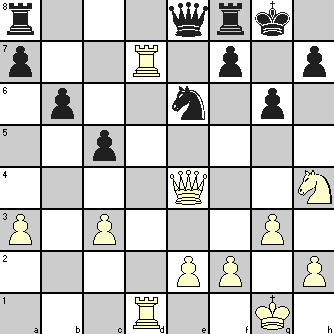
The diagram shows the position in Anand-Topalov game after 24 moves.

anand-topalov game

25. b6 Ra5 White was threatening 26. Bb5+ to capture the rook
 
26. Rd1 Bg5 It is right strategy for Black to try to exchange White’s Bishop of the same color as the promotion square b8 for White’s NP
 
27. b7 Ke7 Black had to attend to the immediate threat posed by White before he could implement his strategy!
 
28. Bb6 Re5 Threatening the Rook was just a gain in tempo but White’s aim went deeper than that!
 
29. Bd8+! Resigns The best Black could do was 29. … Rxd8 (best) 30. Rxd8 Kxd8 31. b8=Q+ Kd7 32. Qxe5 with an easy win for White

The Topalov-Anand game after 21 moves stood as under:

topalov-anand game

22. Nf3 c4
23. Qh4 Nc5
24. Re7 Rd8 In the given situation 25. Rxe8 Rxd1+ 26. Kg2 Rxe8 getting two Rooks for the Queen must have been acceptable to Black (and so, White would not give him that benefit!)
 
25. Rf1 Resigns The likely continuation could be 25. … Qc6 26. Ng5 h5 27. Nxf7 Rxf7 28. Rxf7 Kxf7 29. Qxd8 giving White one extra passed pawn and a Rook against Knight, which should be enough for him to win.

Watch first Game -- Anand Won

Watch second Game -- Topalov Won

Middle game tactics: Moving the worst piece first is a good idea

4
Filed under Chess Strategy
Tagged as chess, chess game analysis, chess games, chess middle game, chess pieces, chess positions, Chess Strategy, Chess tactics

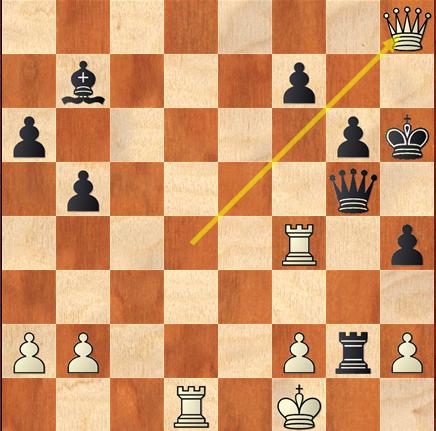
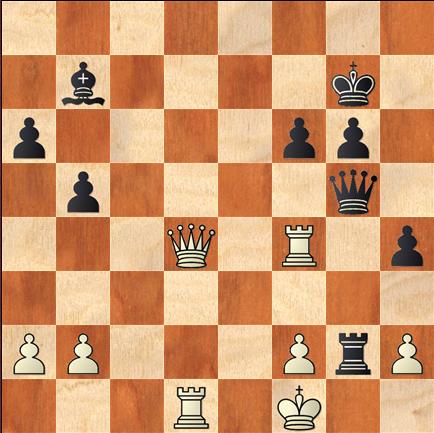
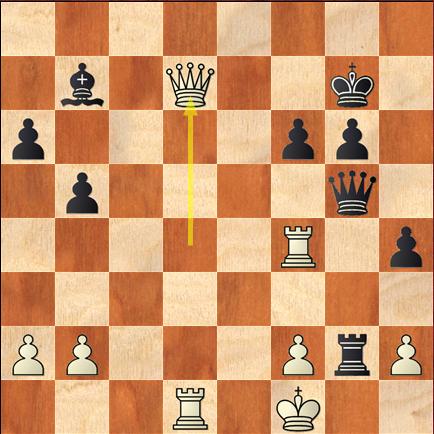
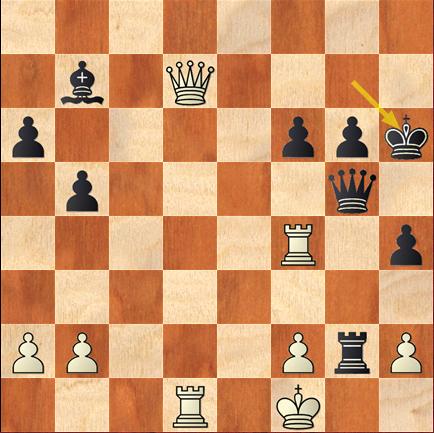
The Middle game part in the game of chess is the place where most of the tactics are tried and effectively deployed. This is so because, it is in this stage that the major and minor pieces of both the players would be battling for control over the squares. As you might be aware, tactics are a series of less than three moves at a stretch aimed at a positional advantage and/or thwarting the plans of the opponent. In most of the cases, the tactical moves planned by a player might not fully materialize due to the defensive moves or counter attacking moves of the opponent. So, there would be a series of tactics that might be required to be calculated and assessed by the player before effectively deploying it into action.

It is quite possible in such occasions that one gets caught in a dilemma as to which piece to move or how to initiate a tactical ploy to gain advantage over the opponent. It is in this context that assessing the strengths and weaknesses of the major and minor pieces at work in the board should be assessed, and the least effective piece in the board should be considered as the starting point of a tactical ploy. The process of identifying the weak piece is not a one-time affair in the game. The positions keep changing quite frequently and it is essential that the idea of identifying the relative weakness in the pieces is constantly reviewed and tactics are planned accordingly so that one can have an edge over the opponent.

Let us try to explore this concept a little deeper with the help of a game played in 1995 between two grandmasters, and see how the concept works out.

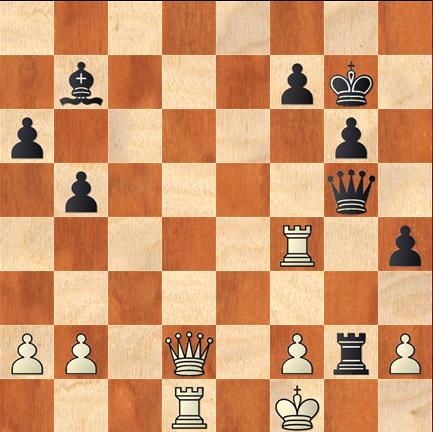
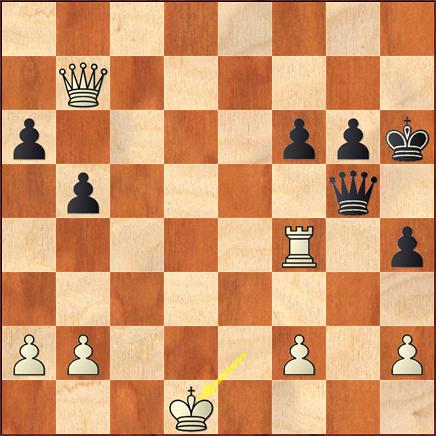
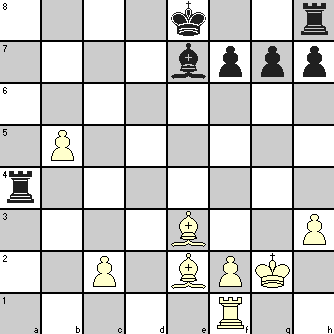
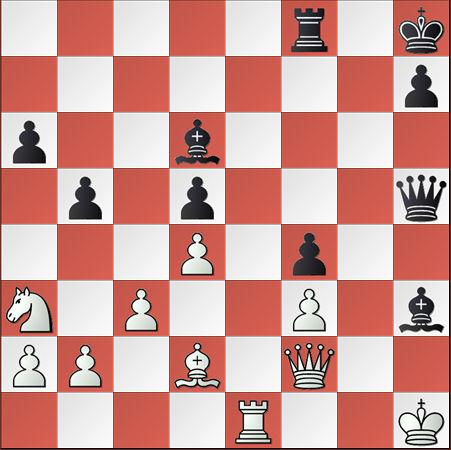
The position of the game after 26 moves by White is given hereunder, and it is the turn of Black to make a move.

pict1

A casual look at the board reveals that the Black has two bishops as against one of White. White, however, has an additional Knight and also one extra pawn. Despite a pawn down, black has a good position on the board, and a fair chance for launching the attack. The light squared bishop is threatening the white knight at a3, and at the same time providing cover for the pawn at f3. Now the dilemma is which is the piece to be moved. It is evident that the rook at f8 is not so effective, and there is not much room for moving any of the pawns.

The game continued as follows with the black preferring to move his weak rook at f8.

26. …. Rg8
27. Rg1 …. Sensing the ploy that blacks light squared bishop might threaten the white king with a check on g2, the rock has been moved for additional cover.
27. …. Rxg1
28. Kxg1 …. Black preferred to exchange his rook

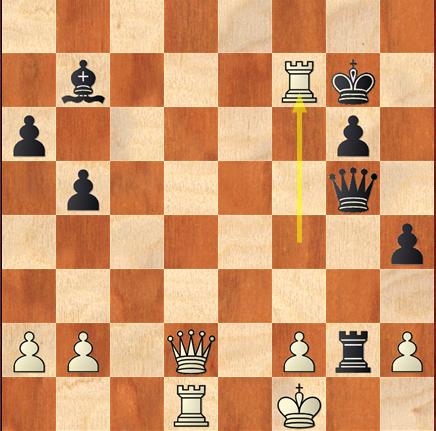
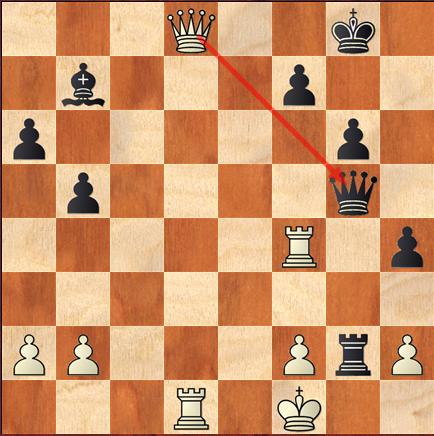
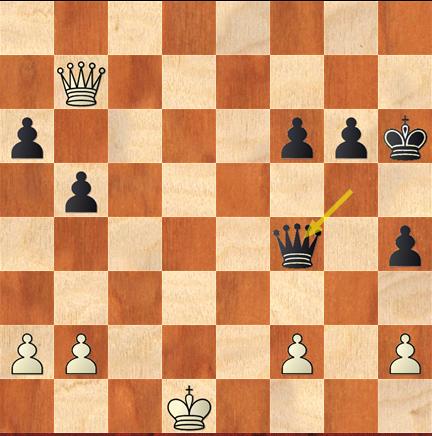
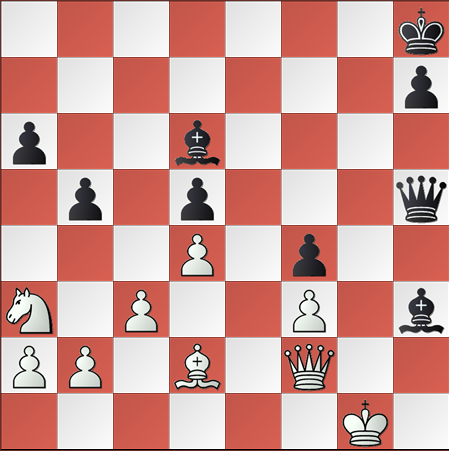
The position in the board after White’s 28th move is given below:

pict2

As has been stated earlier, it is not necessary that the idea of identifying the worst piece should be a one-time affair. It has to be looked for constantly to have better control over the overall board and also an edge over the opponent. Now, we need to once again identify the weak piece or the piece that can be ideally considered for the next move. The light-squared bishop is exerting pressure on the White King restricting his move to only two of the four possible moves, and the dark-squared bishop is protecting the pawn at f3. It is obvious that the queen should be the one to be moved.

A deep look at the squares reveals that the white square d3 is unprotected. This would be better for the black queen to land in to exert more pressure on the white king. Black decides to execute the plan as follows:

28. …. Qg6+
29. Kh1 Qd3 Mission completed for black
30. Be1 …. White tries to activate his Knight at a3 to c2.

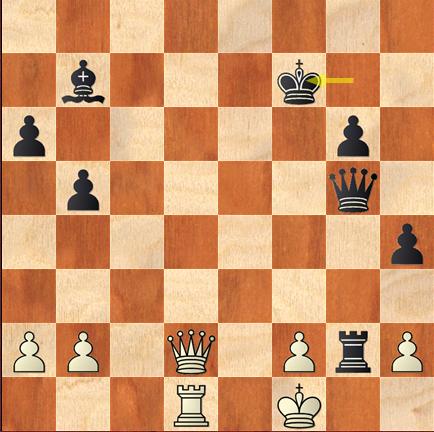
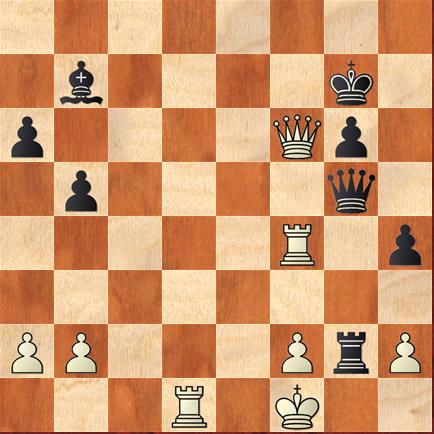
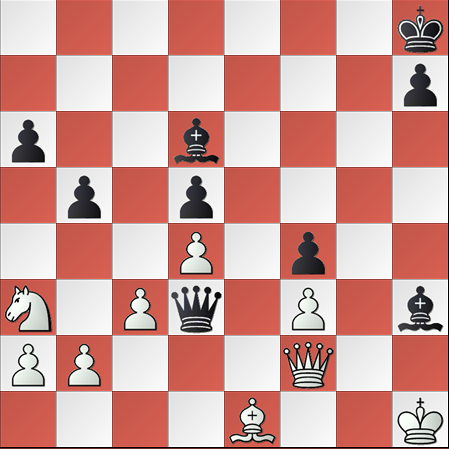
The position after 30 moves of white is given below:

pict3

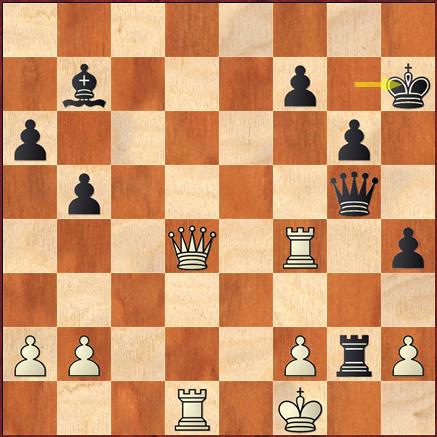
It is the turn of Black to move now. What should he move now? Again the process of identifying the weak piece or ineffective piece needs to be carried out.

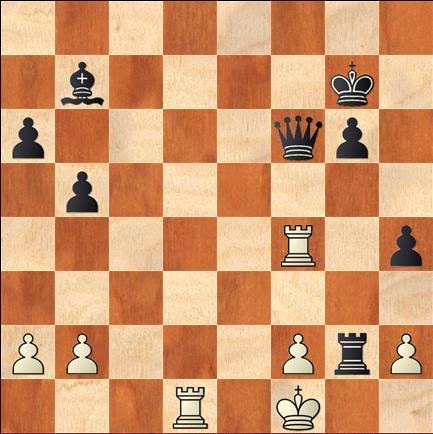
It is clear that after White moved his dark-squared bishop from d2 to e1, the threat for the black pawn at f3 is eliminated, and there is no need for the dark-squared bishop at d6 to provide cover for the f3 pawn. As such, the weak piece or ineffective piece now turns out to be the dark-squared bishop.

30. …. Be7
31. Nc2 Bh4
32. Nb4 Qd1

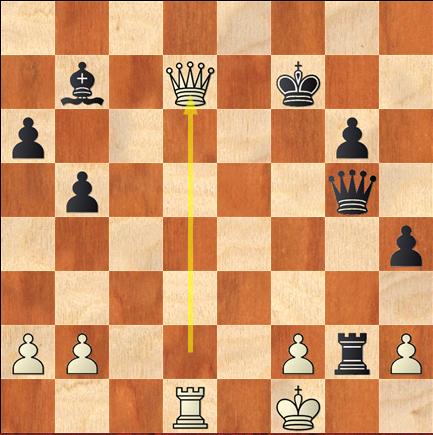
The game is almost over for White. The decision to move the dark-squared bishop from d6 to e7 and then follow it with a move to h4 (Bh4) is too good for white to handle, and as such lost the initiative. The end game is more of a formality now, with black firmly in control.

Analysis of the positions and the relative strengths and weaknesses should precede any tactical ploys, and this game is a best example for this useful trick, which might turn out to be so handy in the middle game.